On this page 18 sections
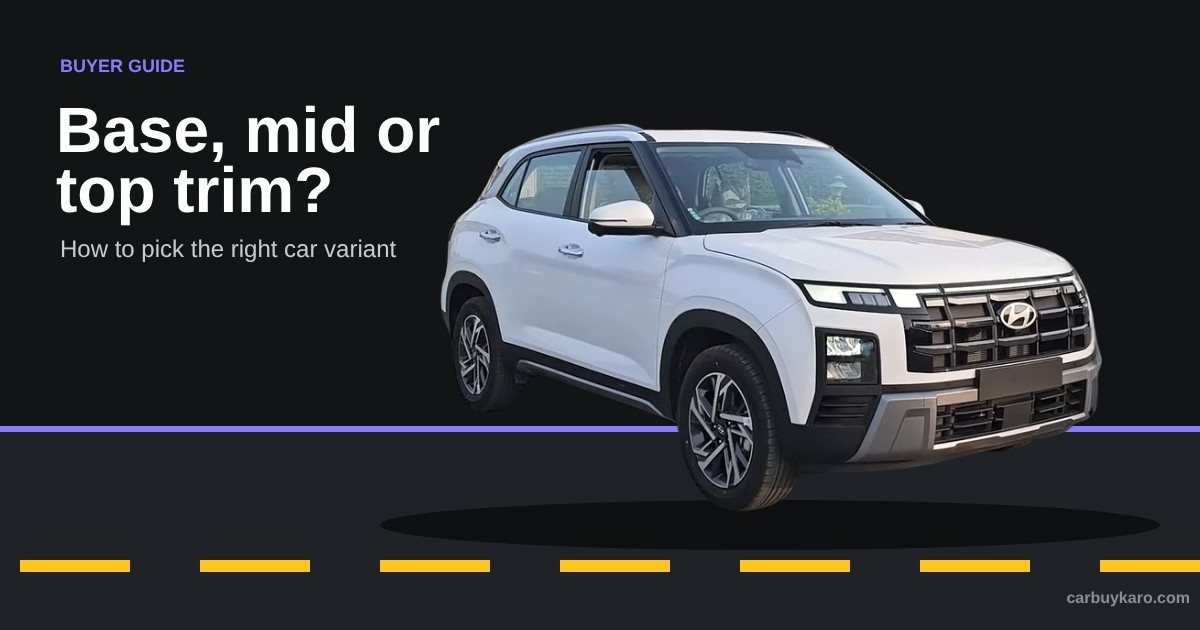
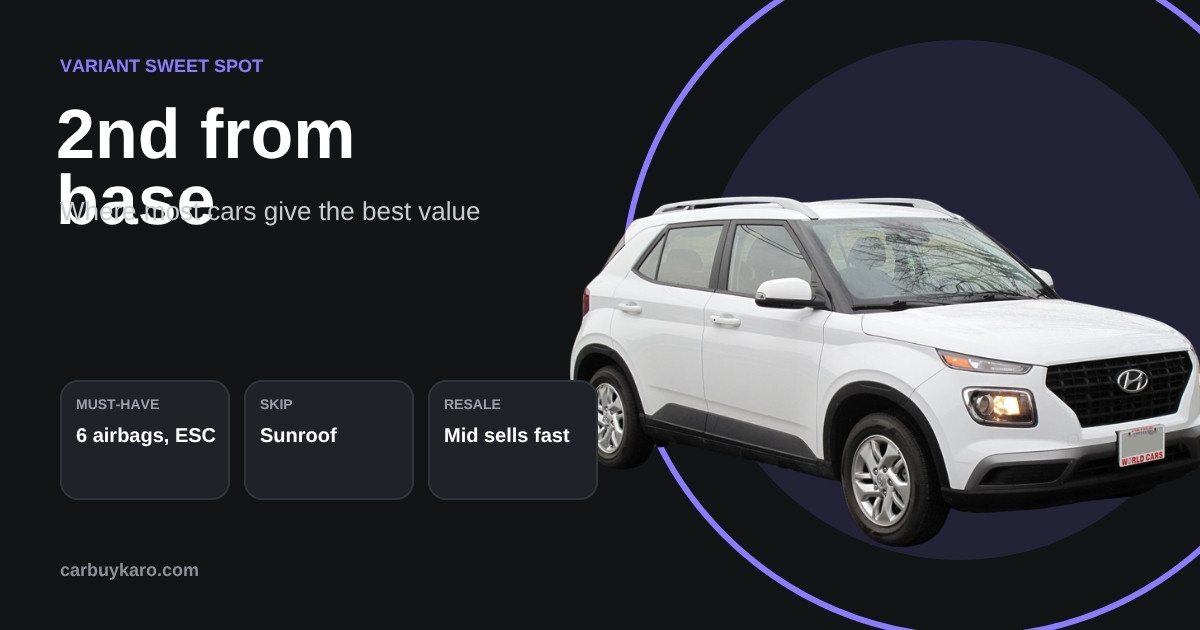
Learning how to choose a car variant can save you ₹1–3 lakh on the same car. Short answer: for most Indian buyers, the mid variant, usually the second or third trim from the base, is the best value. It includes the important safety features and the comfort items you will use every day, without paying for extras you rarely use. It also tends to have the best resale value. Buy the base variant only if your budget is fixed, and the top variant only if you will genuinely use its extra features.
Here is a step-by-step method that works for any car.
Why variants matter so much
Most cars in India come in five to eight variants, sometimes more, with price differences of ₹3–5 lakh between the cheapest and most expensive. Dealers often push buyers towards the top variant because it has the most impressive features, and buyers on a tight budget often pick the base variant to hit a price point. Both can be mistakes.
The right variant depends on three things: safety, the features you will use daily, and resale.
Step 1: Set your non-negotiables
Start with safety. Your chosen variant should have:
- Six airbags, or at least front and side airbags.
- Electronic stability control (ESC).
- ISOFIX child seat mounts if you have young children.
- Rear parking camera or sensors for city parking.
Many cars now have six airbags as standard, but check the exact variant. Safety features cannot be added later. Our safest cars guide explains what matters.
Step 2: List the features you will use every day
Be honest. Write down the features you will use daily and the ones that are “nice to have”.
Features most people use daily:
- Touchscreen with Android Auto or Apple CarPlay
- Automatic climate control
- Rear AC vents (for families)
- Power windows and adjustable mirrors
- Rear camera
- Automatic gearbox (for city drivers)
Features many people rarely use:
- Sunroof (hot in Indian summers, rarely opened in cities)
- Ambient lighting
- Premium audio upgrades
- Larger alloy wheels (often make the ride firmer)
- ADAS, if you rarely drive on expressways
Step 3: Find the lowest variant with your must-haves
Look at the variant list and find the lowest trim that includes your safety non-negotiables and daily-use features. That is usually your best buy. Anything above it is paying for extras.
Step 4: Check the price jumps
Look at the price difference between each variant and what it adds. Sometimes one step up adds a lot for a small price. For example, on the 2026 Maruti Baleno, the jump from Sigma to Delta is about ₹1 lakh, but Delta adds the touchscreen, better audio and the option of an AMT. That jump is usually worth it. The jump from Zeta to Alpha adds about ₹1.1 lakh for LED projector lamps, a 360-degree camera and a head-up display, which is nice but not essential. See our Baleno 2026 guide for the full list.
Step 5: Think about resale
Mid variants usually sell fastest in the used market because they offer the best balance for second-hand buyers too. Base variants sell slower because buyers want features. Top variants hold value in percentage terms, but they lose more money in absolute terms because they cost more to begin with.
Base, mid or top: who should choose what?
Base variant is right if:
- Your budget is absolutely fixed.
- It has six airbags and ESC.
- You plan to use the car for a specific purpose, such as a fleet or a second car for short trips.
Mid variant is right if:
- You want the best value for money (most buyers).
- You want good resale.
Top variant is right if:
- You will genuinely use the extra features every day.
- You plan to keep the car for a long time and want the best comfort.
- The price jump is small compared with what it adds.
Automatic or manual variant?
In city traffic, an automatic can make a bigger difference to your daily life than any feature. On many cars, an AMT adds only ₹50,000–60,000. If you drive mostly in cities, consider moving to an automatic mid variant before a manual top variant. Our AMT vs CVT vs DCT guide explains the types.
Worked example: choosing a Hyundai Creta variant
A family in Hyderabad wants a Creta and has about ₹17 lakh on-road to spend.
- Non-negotiables: six airbags (standard on the Creta), ESC, rear camera, automatic gearbox.
- Daily features: touchscreen with wireless phone connectivity, automatic climate control, rear AC vents.
- Nice to have: panoramic sunroof, ventilated seats, 360-degree camera.
They find that a mid variant with the 1.5 petrol CVT covers all their non-negotiables and daily features within budget. The top variant adds ventilated seats, a 360-degree camera and ADAS, but pushes the on-road price above ₹21 lakh. They choose the mid variant and save about ₹4 lakh, or about ₹8,300 a month on EMI over five years. Check your own numbers in our car EMI calculator.
Dealer tactics to watch for
- “The variant you want has a long waiting period.” Sometimes true, sometimes a tactic to upsell. Ask other dealers.
- Bundled accessories. Dealers often add accessory packs worth ₹20,000–60,000. Buy only what you need.
- “Top variant has better resale.” Only in percentage terms. In rupees, you often lose more.
- Mandatory extended warranty or insurance. Neither is mandatory from the dealer. Compare prices.
Common mistakes
- Buying the top variant for one feature. Check whether a mid variant can get that feature as an option or accessory.
- Skipping safety for features. A sunroof is never worth losing airbags or ESC.
- Ignoring the automatic option. It often improves daily life more than a top-trim feature.
- Not comparing variants across cars. A mid variant of a bigger car can cost the same as the top variant of a smaller one. See our best SUV under ₹15 lakh list for examples.
Variant naming decoded
Carmakers use confusing letters for their trims. A quick guide to common patterns:
- Maruti: LXi, VXi, ZXi, ZXi+ for Arena models; Sigma, Delta, Zeta, Alpha for Nexa models. The “(O)” suffix means an optional pack with extra features.
- Hyundai: E, EX, S, SX, SX(O). SX(O) is usually the top.
- Tata: names like Smart, Pure, Adventure, Accomplished, Creative. The ”+” versions add features.
- Mahindra: MX, AX3, AX5, AX7 and so on; higher numbers mean more features. “L” often means luxury pack.
- Kia: HTE, HTK, HTX, GTX, with ”+” or “(O)” versions.
Names change with facelifts, so always compare the feature list, not just the badge.
Petrol or diesel variants: the price gap
Diesel and turbo-petrol variants usually cost more than naturally aspirated petrol versions of the same trim. Sometimes a diesel mid variant costs as much as a petrol top variant. Decide your fuel type first based on how much you drive, then pick the trim. Our petrol vs diesel vs CNG guide explains how to choose the fuel.
Special and limited editions
Carmakers often launch “special editions” with cosmetic upgrades like black alloys, badges and seat covers. They can be good value if they add features you want at a small premium. But check what is actually new. Many special editions are mostly stickers and accessories that you could add later for less.
When a top variant does make sense
The top variant is the right choice in a few situations:
- You keep cars for ten years or more and want maximum comfort throughout.
- The price jump is small compared with what it adds, for example ₹40,000 for ventilated seats, a 360 camera and extra airbags.
- Safety features are only in the top trim. Some cars still reserve ESC or six airbags for higher variants. In that case, safety wins.
- You drive long distances and features like adaptive cruise control or premium seats reduce fatigue.
A quick variant checklist
Take this to the showroom: six airbags, ESC, rear camera, touchscreen with phone connectivity, rear AC vents, automatic if you drive in traffic. Tick them off on the variant list and circle the lowest trim that has them all. That circled trim is your starting point.
Final advice
If two variants feel equally good, choose the cheaper one and keep the difference for insurance, accessories you really need, or a larger down payment. A smaller loan often brings more peace of mind than an extra feature.
Summary
To choose the right car variant, start with safety, list the features you will use daily, and pick the lowest trim that includes them. For most buyers, that is a mid variant, which also offers the best resale. Buy the base only on a fixed budget with good safety kit, and the top only if you will use its extras every day. Use our car affordability calculator to check the final price fits your finances.
Frequently asked questions
Which car variant is best value in India?
For most cars, the mid variant, usually second or third from the base, offers the best balance of features, safety and price. It also tends to have the best resale value.
Should I buy the base variant of a car?
Only if your budget is fixed and the base variant has the essential safety features. Base variants often lack a touchscreen, rear camera and other items that affect daily comfort and resale.
Is the top variant worth it?
Only if you will use the extra features every day. Top variants add a lot of cost for items like sunroofs, bigger wheels and premium audio, and they lose value faster in absolute terms.
Can I add features later with accessories?
Some features, like a touchscreen or reverse camera, can be added as accessories, but factory-fitted versions work better and are covered by warranty. Safety features like airbags and ESC cannot be added later.
Prices are ex-showroom unless we say otherwise, and makers change them often. Confirm the latest price, offers and variant details with an authorised dealer before you book.


