On this page 22 sections
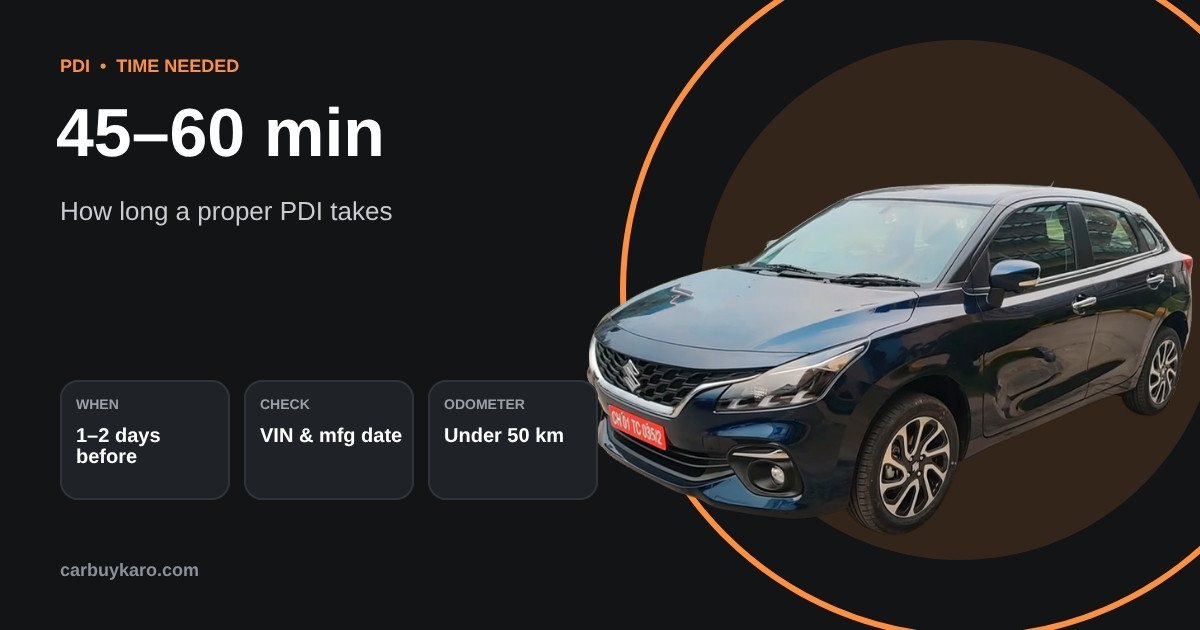
A new car PDI checklist helps you catch problems before you accept delivery and sign the paperwork. PDI means pre-delivery inspection. Do it one or two days before delivery, in daylight, and allow 45–60 minutes. Check the exterior for dents, scratches and paint mismatch, the interior for stains and damage, the VIN and manufacturing date, tyres, engine bay fluids, all electronics, the odometer (usually under about 50 km), accessories and documents, then take a short test drive. Once you sign the delivery note, getting problems fixed becomes much harder.
Here is a detailed checklist you can take to the showroom.
Before you go
- Ask the dealer for a PDI slot one or two days before delivery.
- Take a friend, a torch (or phone light), a microfibre cloth and a printed or phone copy of this checklist.
- Bring your booking receipt and the agreed quote.
- Go in daylight. Showroom lights and night-time hide paint flaws.
1. Identity: is this your car?
- VIN / chassis number: match it with the invoice, insurance papers and the number stamped on the chassis.
- Engine number: match it with the invoice.
- Manufacturing date: check the plate on the door pillar or under the bonnet. A car built many months ago is older stock; you may ask for a newer one or a discount.
- Variant and colour: make sure it is exactly what you booked.
2. Exterior
Walk around the car slowly.
- Paint: look along each panel at an angle for dents, ripples and scratches. Check for colour mismatch between panels, which may indicate repainting.
- Panel gaps: should be even on both sides (bonnet, doors, boot).
- Glass: windscreen and windows free of chips and cracks. Check that all glass carries the same brand markings; a different brand may mean replacement.
- Lights: headlamps, tail-lamps, indicators and fog lamps free of cracks and moisture.
- Bumpers and underbody: check the lower edges for scrapes.
- Wheels: no kerb damage on alloys.
- Badges and trim: all present and aligned.
3. Tyres
- Brand and size match the specification, and all four (plus spare) are the same.
- DOT code: a four-digit code shows the week and year of manufacture (for example, 2326 means the 23rd week of 2026). Tyres should be recent.
- Tread: new tyres have full tread with visible moulding hairs.
- Spare wheel, jack and tools are present.
4. Interior
- Seats and upholstery: no stains, tears or loose stitching.
- Dashboard and trim: no scratches, loose panels or glue marks.
- Headliner and carpets: clean and dry. Damp carpets can indicate water ingress.
- Smell: a musty smell may indicate water damage.
- Seatbelts: all latch and retract smoothly.
- Floor mats and accessories included as promised.
5. Electronics and features
Turn the car on and test:
- All lights, including interior and boot lights.
- Air conditioning and heater at all fan speeds; rear AC vents.
- Infotainment, Bluetooth, Android Auto / Apple CarPlay, speakers.
- Power windows (all four, including auto up/down), mirrors, central locking, both keys.
- Sunroof, if fitted: opens, closes, no rattles.
- Reverse camera, 360 camera and parking sensors.
- Horn, wipers, washers, defogger.
- USB and wireless charging.
- Warning lights: after starting, none should remain lit.
6. Engine bay
- Fluids: engine oil, coolant, brake fluid and washer fluid at correct levels.
- Leaks: no oil or fluid drips on the engine or ground.
- Battery: terminals clean and secure; check the battery manufacturing date.
- Rust or dirt: a new engine bay should be clean.
7. Odometer and usage
- Odometer: usually under about 50 km. A much higher figure suggests the car was used for demos or transferred from another dealer.
- Pedals and steering wheel: should not show wear.
8. Documents
- Invoice: correct name, address, variant, VIN, engine number and agreed price.
- Insurance policy: correct vehicle details, add-ons and IDV. Our zero depreciation insurance guide explains the add-ons.
- Temporary or permanent registration details.
- Owner’s manual, service book and warranty card.
- Road tax and registration receipts. See our on-road price explainer for what should appear.
- FASTag issued and linked.
- Extended warranty documents, if bought.
9. Short test drive
If the dealer allows a short drive before delivery:
- Listen for rattles and unusual noises.
- Check that the car drives straight and the steering is centred.
- Test the brakes gently and firmly.
- Check the gearbox shifts smoothly (manual and automatic).
- Watch for warning lights.
What to do if you find a problem
- Minor issues (a loose trim piece, a missing floor mat): ask the dealer to fix or supply before delivery, in writing.
- Paint damage or dents: ask for proper repair or a different car. Consider negotiating a discount if you accept a repaired car, but you are within your rights to refuse.
- Old manufacturing date: ask for a newer car or a discount that reflects the older build.
- High odometer reading: ask for an explanation and a different car.
- Wrong variant or colour: do not accept delivery.
Do not sign the delivery acceptance until you are satisfied.
Delivery day
On delivery day, do a quick repeat check of the exterior and key items, because the car may have been moved or washed since PDI. Confirm that any agreed fixes are done. Then enjoy the moment.
Common mistakes
- Doing the PDI at night or in a hurry on delivery day.
- Signing before checking.
- Not checking the manufacturing date and VIN.
- Accepting verbal promises instead of written commitments.
- Forgetting the second key and documents.
Accessories check
If you paid for accessories, check that each item is fitted properly and matches what was invoiced: floor mats, seat covers, mud flaps, door visors, dashcam, body protection film or any other add-ons. Check that aftermarket electrical accessories were installed by the dealer’s approved technicians and do not affect the warranty. Our on-road price explainer covers which accessories are optional.
Special checks for EVs
For electric cars, add these to your PDI:
- Battery charge level: it should be reasonably charged for delivery, and the display should show no battery warnings.
- Charging port and cable: check the port flap, the portable charger and cables for damage.
- Wallbox arrangements: confirm the home charger installation date if it is included. Our home EV charger installation guide explains what to prepare.
- Software version: ask whether any updates are pending and whether they will be done before delivery.
- Battery warranty documents: make sure you receive them.
Special checks for CNG cars
- CNG cylinder certificate and fitment documents.
- Cylinder test date printed on the cylinder.
- No gas smell around the boot or under the car.
- Switching between CNG and petrol works smoothly.
Our best CNG cars guide has more tips for CNG owners.
Why dealers sometimes resist PDI
Some dealers prefer to do the inspection themselves and hand over the car directly on delivery day. That is convenient for them but leaves you little time to spot issues. Politely insist on your own inspection before delivery. Most reputable dealers accept it, and many now encourage it. If a dealer refuses outright, treat that as a warning sign.
Keep a record
Take photos of the car during PDI, especially any issues and their fixes. Save the dealer’s written commitments. If a problem appears later, these records help with warranty claims and disputes.
PDI checklist in short
Identity (VIN, engine number, build date) → exterior and glass → tyres and spare → interior and smell → electronics → engine bay → odometer → accessories → documents → short drive. Tick each item, note problems, and get fixes promised in writing before you sign anything.
After delivery: the first week
In the first week, watch for new rattles, warning lights, AC performance and any water leaks after rain or a wash. Report issues promptly; early reports are easier to handle under warranty. Book the first free service on time and keep the invoice.
Bring a helper
A second person makes PDI faster and more thorough. One person can operate lights, indicators and windows while the other watches from outside, and a fresh pair of eyes often spots scratches you miss.
A calm, careful inspection now saves weeks of back-and-forth with the service centre later, so take your time and do not let anyone rush you. Your new car deserves that care.
Summary
A new car PDI checklist protects you from accepting a damaged, old or incorrect car. Inspect one or two days before delivery in daylight, check identity and manufacturing date, exterior, tyres, interior, electronics, engine bay, odometer and documents, and take a short test drive. Get any fixes in writing before signing. For more buying help, see our best time to buy a car guide and our ownership section.
Frequently asked questions
What is PDI in cars?
PDI stands for pre-delivery inspection. It is a check of the new car before you accept delivery, to make sure it is undamaged, complete, correctly configured and in good working order.
When should I do a PDI?
Ideally one or two days before delivery, in daylight, when you can inspect calmly and there is time to fix issues or request a different car.
How do I check a car's manufacturing date?
The manufacturing month and year are usually printed on a plate or sticker on the door pillar or under the bonnet, and encoded in the VIN (chassis number). Check the tyre DOT codes too.
What odometer reading is acceptable on a new car?
Usually under about 50 km, accounting for transport and internal movement. A much higher reading may mean the car was used as a demo or test drive vehicle.
Prices are ex-showroom unless we say otherwise, and makers change them often. Confirm the latest price, offers and variant details with an authorised dealer before you book.


