On this page 20 sections
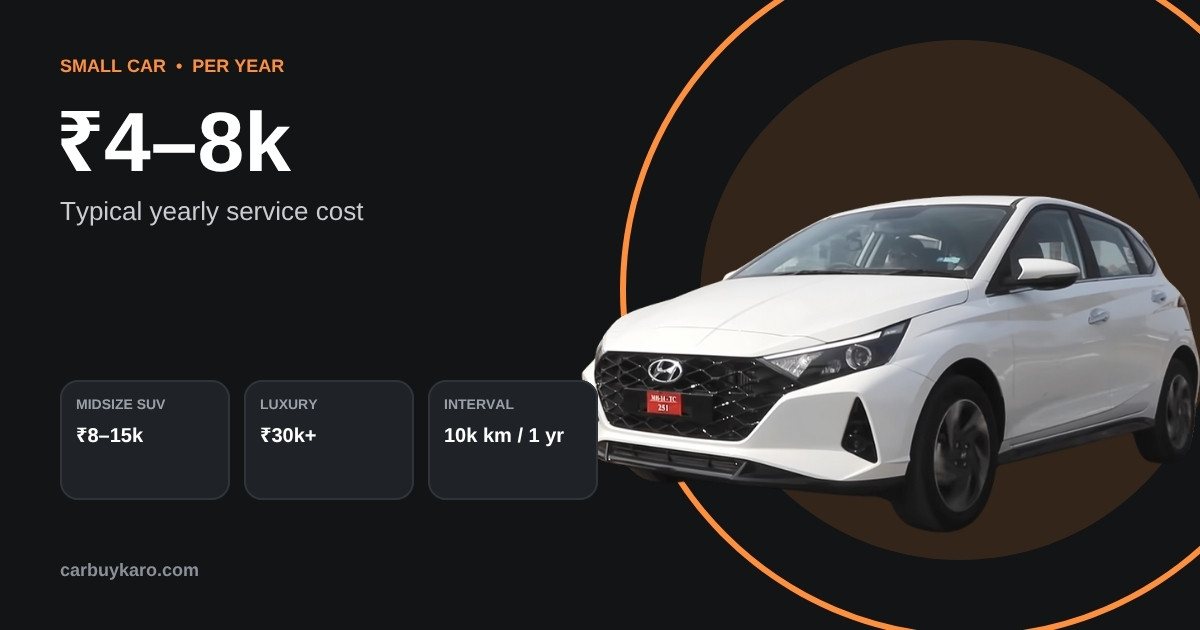
The car service cost in India depends mostly on the brand, segment and age of the car. As a rough guide for 2026: small cars from Maruti, Hyundai, Tata and Toyota’s shared models typically cost ₹4,000–8,000 per routine service; compact and midsize SUVs around ₹8,000–15,000; and luxury cars ₹30,000 or more. Most cars need a service every 10,000 km or once a year, whichever comes first. EVs usually cost noticeably less to maintain. Extended warranties, service packages and sensible driving can keep costs down.
Here is what services include, what different brands typically cost and how to save.
What a routine service includes
A typical periodic service includes:
- Engine oil and oil filter replacement
- Air filter cleaning or replacement
- Cabin (AC) filter cleaning or replacement
- Checks on brakes, suspension, steering and tyres
- Topping up coolant, brake fluid and washer fluid
- Battery check
- Wheel alignment and balancing (sometimes extra)
- Car wash
Major services, typically every 40,000 km or so, may add spark plugs, brake fluid replacement, coolant replacement, fuel filter (for diesels) and gearbox oil or CVT fluid.
Typical costs by segment (approximate)
| Segment | Examples | Routine service | Major service |
|---|---|---|---|
| Small hatchback | Wagon R, Swift, Tiago | ₹3,500–6,000 | ₹8,000–12,000 |
| Premium hatch / compact sedan | Baleno, i20, Dzire | ₹4,000–7,000 | ₹9,000–14,000 |
| Compact SUV | Nexon, Brezza, Venue | ₹5,000–9,000 | ₹10,000–18,000 |
| Midsize SUV | Creta, Seltos, Elevate | ₹7,000–12,000 | ₹12,000–22,000 |
| 7-seat SUV / MPV | XUV 7XO, Safari, Innova | ₹9,000–16,000 | ₹15,000–30,000 |
| Luxury | BMW, Mercedes, Audi | ₹25,000–50,000 | ₹50,000+ |
These are broad ranges. Actual bills depend on the city, the workshop, what is due and any extra repairs.
Brand differences
Maruti Suzuki: generally the lowest service costs, cheap parts and the widest network. Ideal for buyers in small towns.
Hyundai and Kia: reasonable costs, large network, good parts availability.
Tata and Mahindra: competitive costs; experience varies by dealer, so check local reviews.
Toyota and Honda: slightly higher labour rates in some cities but excellent reliability; Toyota’s strong hybrids are known for low long-term costs.
Skoda and Volkswagen: parts and labour have become more affordable, but still usually above Maruti and Hyundai.
Luxury brands: high parts and labour costs; service packages bought at purchase help a lot.
EVs: lower maintenance
Electric cars have no engine oil, spark plugs, clutch or exhaust. Routine EV services focus on brakes, tyres, suspension, cabin filter, coolant for the battery system and software updates. Many owners report service costs around half those of comparable petrol cars. Brake pads also last longer thanks to regenerative braking. See our best electric cars in India guide.
Free services: what is actually free
Most carmakers offer two or three free services in the first year or two. These usually cover labour only. You pay for engine oil, filters and other consumables if they are due. Expect the first “free” service to cost somewhere from nothing to a few thousand rupees.
Extended warranty and service packages
Extended warranty covers the cost of repairing major mechanical and electrical failures beyond the standard warranty. It is especially useful for automatics, turbo engines and cars with complex electronics.
Service packages (sometimes called annual maintenance contracts) prepay routine services at a fixed price, protecting you from price increases. Buy them at purchase, when they are easiest to negotiate.
Authorised workshop vs local garage
During warranty: use authorised workshops. It keeps the warranty valid and builds a documented service history that helps resale. Our car resale value tips explain why service records matter.
After warranty: a trusted independent garage can be 20–40% cheaper for routine work. Use genuine or good-quality parts, and keep invoices.
How to save on car servicing
- Follow the service schedule. Skipping services often leads to bigger bills later.
- Ask for an estimate before work starts and approve additional jobs individually.
- Question upsells like engine flushing, fuel additives or frequent “decarbonisation” unless recommended in the manual.
- Compare labour and parts prices between workshops.
- Buy a service package or extended warranty at purchase.
- Drive smoothly. Gentle driving reduces brake, clutch and tyre wear.
- Check tyre pressure regularly to reduce tyre wear.
- Use online service booking offers some workshops provide.
Worked example: five-year maintenance cost
A buyer drives 12,000 km a year.
- Maruti Baleno petrol: five routine services at about ₹5,000 plus one major service at about ₹11,000, plus a set of tyres (about ₹20,000) and brake pads (about ₹3,000). Total about ₹59,000 over five years.
- Midsize SUV petrol: five routine services at about ₹9,000 plus one major service at about ₹18,000, tyres (about ₹32,000) and brake pads (about ₹5,000). Total about ₹1 lakh.
These estimates exclude accident repairs. They show that the choice of car affects running costs for years. Compare full ownership costs with our resale value calculator and fuel cost calculator.
Signs your car needs attention between services
- Warning lights on the dashboard.
- Squealing or grinding brakes.
- The car pulling to one side.
- Unusual noises or vibrations.
- Leaks under the car.
- A drop in mileage.
- Hard gear changes or clutch slipping.
Getting these checked early usually costs less than waiting.
Common mistakes
- Skipping services to save money.
- Agreeing to every recommended job without asking why.
- Using cheap, non-genuine parts on critical components like brakes.
- Ignoring CVT or automatic gearbox fluid changes.
- Not keeping invoices, which hurts resale.
Service intervals explained
Most carmakers specify a service every 10,000 km or 12 months, whichever comes first. Some newer cars have longer intervals of 15,000 km. If you drive very little, time-based servicing still matters, because engine oil degrades with age and rubber parts dry out. If you drive a lot in heavy traffic, dusty conditions or short trips, carmakers often recommend “severe service” schedules with shorter intervals.
Check your owner’s manual for your car’s exact schedule, and note which services are major ones, as they cost more.
Costs beyond regular servicing
Routine services are only part of maintenance costs. Budget for:
- Tyres: every 40,000–60,000 km for most cars. A set costs ₹12,000–20,000 for small cars and ₹25,000–45,000 for SUVs.
- Battery: every three to five years, around ₹4,000–10,000 depending on the car.
- Brake pads: every 25,000–40,000 km, a few thousand rupees.
- Clutch (manuals and AMTs): every 60,000–100,000 km depending on driving, ₹8,000–20,000.
- Wiper blades, bulbs and AC servicing: small but regular costs.
- Wheel alignment and balancing: every 5,000–10,000 km or after hitting a big pothole.
Automatic gearbox maintenance
Automatic gearboxes need specific care:
- AMT: similar to a manual; the clutch wears and needs eventual replacement. Actuators are usually reliable.
- CVT: fluid changes at the recommended interval are essential.
- DCT: follow the service schedule and keep software updated; avoid long creeping in traffic with light throttle.
- Torque converter: fluid changes as recommended; very durable.
Our AMT vs CVT vs DCT guide explains how each type works.
How to read a service bill
A service bill is split into parts and labour. Check that:
- Every part replaced was actually due or was approved by you.
- Labour charges match the job descriptions.
- Consumables (like oil) are charged at the correct quantity.
- Any “recommended” jobs you did not approve are not on the bill.
Ask for old parts back if you want proof of replacement. Keep every bill for your records and resale.
Monsoon and summer checks
Before the monsoon, check wiper blades, tyres, brakes, lights and door seals. In flood-prone cities, consider an engine protection insurance add-on. Before summer, service the AC and check coolant levels, since overheating in traffic is common in Indian summers.
Luxury car maintenance tips
Luxury cars cost much more to maintain, but a few steps help. Buy a service package at purchase, when dealers are most flexible. Consider an extended warranty for the complex electronics. Use run-flat tyre insurance if your car has run-flats. After warranty, specialist independent workshops for German brands can cost significantly less than dealerships for routine work.
Keep a maintenance log
Record every service, repair, tyre change and battery replacement with the date, odometer reading and cost. A simple spreadsheet or notes app works. It helps you spot patterns, plan upcoming costs and prove maintenance history when you sell. Our car resale value tips explain how a complete history raises your selling price.
Is a cheaper-to-service car worth choosing?
Over five years, the difference in maintenance between a low-cost brand and a premium one can easily reach ₹40,000–₹1 lakh. For buyers who keep cars a long time or live away from big cities, low service costs and a wide network can matter more than an extra feature. Include maintenance in your comparison, alongside fuel, insurance and depreciation.
A small, regular maintenance habit costs far less than a large repair caused by neglect. Treat servicing as part of the price of owning the car, and budget for it every month.
Summary
The car service cost in India ranges from about ₹4,000–8,000 per routine service for small cars to ₹8,000–15,000 for midsize SUVs and ₹30,000 or more for luxury cars, with EVs costing less. Follow the schedule, approve work carefully, use authorised workshops during warranty and consider service packages or extended warranty at purchase. For more on the true cost of owning a car, see our ownership section.
Frequently asked questions
How much does car servicing cost in India?
For small cars from brands like Maruti and Hyundai, routine annual services typically cost ₹4,000–8,000. Midsize SUVs usually cost ₹8,000–15,000 per routine service. Luxury cars often cost ₹30,000 or more.
How often should I service my car?
Most cars need a service every 10,000 km or once a year, whichever comes first. Some newer cars have longer intervals. Follow your owner's manual.
Are free services really free?
Free services usually cover labour for the first few services. You still pay for consumables like engine oil, filters and other parts if they are due.
Is it cheaper to service a car at a local garage?
Often, yes, especially for older cars out of warranty. But during warranty, servicing at authorised workshops protects your warranty and resale value.
Prices are ex-showroom unless we say otherwise, and makers change them often. Confirm the latest price, offers and variant details with an authorised dealer before you book.


