On this page 19 sections
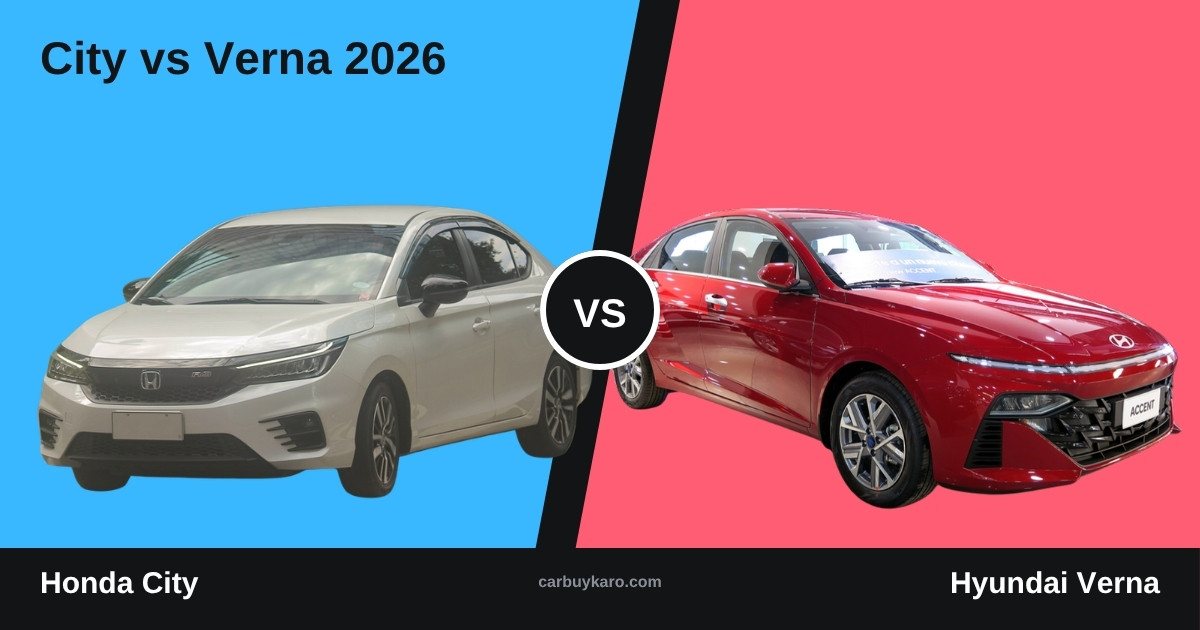
The City vs Verna choice has defined India’s midsize sedan segment for more than a decade. Short answer: the Hyundai Verna (₹10.69–17.48 lakh ex-showroom) starts cheaper, offers a strong 160 hp 1.5 turbo-petrol with a 7-speed DCT, and is packed with features. The Honda City (about ₹12–21 lakh) is the more refined, understated choice and the only sedan in the segment with a strong hybrid, the e:HEV, which claims more than 27 km/l. Pick the Verna for performance and value; pick the City for refinement, reliability and, if you drive a lot, the hybrid’s fuel savings.
Sedans have lost ground to SUVs, but many buyers still prefer them for their comfort, stability and boot space. Here is the full comparison.
City vs Verna: key specs
| Honda City | Hyundai Verna | |
|---|---|---|
| Price (ex-showroom) | about ₹12–21 lakh | about ₹10.69–17.48 lakh |
| 1.5 petrol | i-VTEC, about 121 PS, MT/CVT | about 115 PS, MT/CVT |
| Turbo-petrol | Not offered | 1.5 turbo, about 160 PS, MT/7DCT |
| Strong hybrid | e:HEV, 27+ km/l claimed | Not offered |
| Top variant | ZX+ e:HEV around ₹21 lakh | SX(O) turbo DCT around ₹17.5 lakh |
Engines
Honda City
The 1.5 i-VTEC petrol is one of the smoothest engines in India. It revs cleanly and feels refined, with a slightly sporty character at higher revs. It is offered with a manual or a CVT.
The e:HEV strong hybrid combines a 1.5 petrol with two electric motors. In city traffic it runs mostly on electric power, with the engine acting as a generator. At highway speeds the engine can drive the wheels directly. The result is excellent efficiency in traffic and smooth, silent low-speed driving.
Hyundai Verna
The 1.5 petrol is smooth and adequate, similar in character to the City’s but slightly less powerful. It is offered with a manual or CVT.
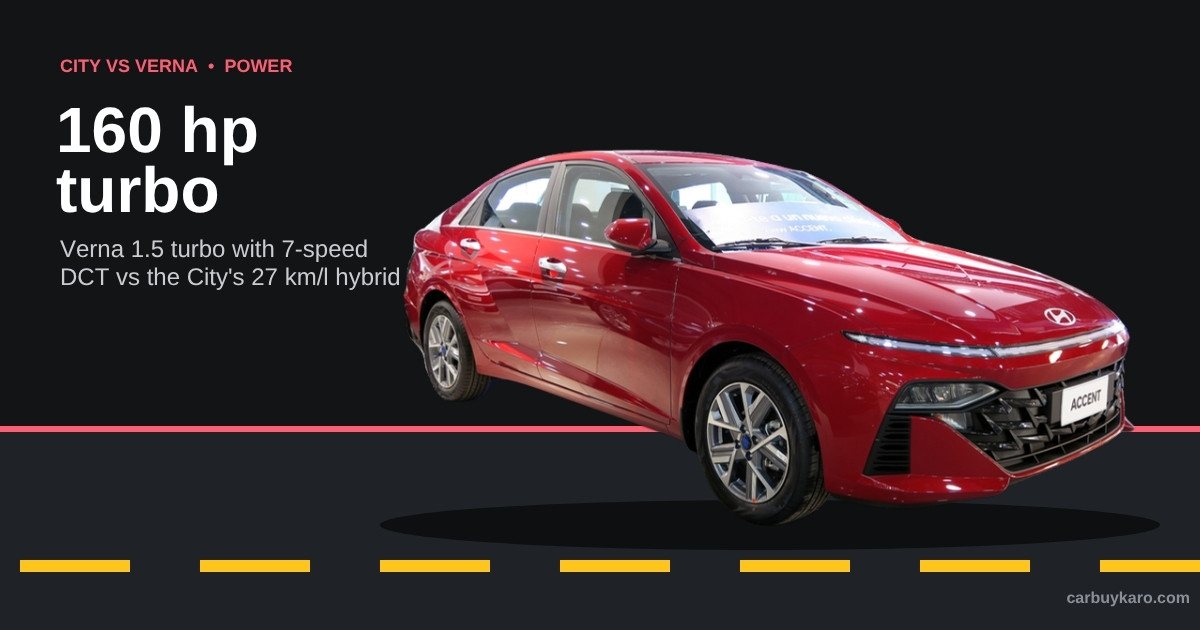
The 1.5 turbo-petrol makes about 160 PS and is paired with a manual or a 7-speed DCT. It is the quickest car in the segment by a clear margin and a genuine enthusiast’s choice.
Performance vs efficiency
If you enjoy driving, the Verna turbo is the one. It accelerates strongly, overtakes easily and feels lively on open roads.
If you want low running costs, the City hybrid is unmatched. In heavy traffic it can deliver well over 20 km/l in real use, far better than any other petrol sedan.
For balanced use, the 1.5 petrol CVTs of both are smooth and sensible, and they were priced almost identically in 2026.
Running costs
For a driver covering 1,500 km a month, mostly in the city, with petrol at ₹95:
| Version | Real-world economy | Monthly fuel cost |
|---|---|---|
| City 1.5 CVT | 13 km/l | about ₹11,000 |
| City e:HEV hybrid | 22 km/l | about ₹6,500 |
| Verna 1.5 CVT | 13 km/l | about ₹11,000 |
| Verna 1.5 turbo DCT | 11.5 km/l | about ₹12,400 |
The City hybrid saves about ₹4,500 a month over the CVTs at this usage, or about ₹2.7 lakh over five years. Whether that pays for the hybrid’s premium depends on the exact variant prices you compare. Try your figures in our fuel cost calculator, and read our hybrid vs electric guide for how strong hybrids work.
Features
The Verna is known for its long feature list: large twin screens, ventilated and heated front seats, a premium Bose audio system, 360-degree camera, Level 2 ADAS and more on top trims. It often offers more features for the money.
The City covers the essentials well, with a touchscreen, digital cluster, sunroof and Honda Sensing ADAS on upper variants. Its cabin design is simpler and more classic.
If gadgets matter to you, the Verna wins. If you prefer a clean, understated cabin, the City will appeal.
Space and comfort
Both are spacious sedans with comfortable rear seats and big boots, one of the key reasons to choose a sedan over a similarly priced SUV. The City has long been praised for rear-seat comfort and legroom. The Verna’s newer design has a wide cabin with good space as well.
The City hybrid’s battery takes up some boot space, so check the boot if you plan to carry a lot of luggage.
Ride and handling
The City has a well-judged ride, stable at highway speeds and comfortable over most city roads. The Verna is also comfortable, with a slightly softer setup. The turbo Verna’s extra performance is best enjoyed on open highways.
Safety
Both offer six airbags, ESC and Level 2 ADAS on upper variants. The Verna has earned a 5-star rating in Global NCAP testing. Check the latest ratings for both in our safest cars guide.
Reliability and resale
Honda has a strong reputation for reliable engines and gearboxes, and the City name carries weight in the used-car market. Resale values are among the best in the segment.
Hyundai also has a strong reliability record and a larger service network. The Verna holds its value well.
City vs Verna: which should you buy?
Buy the Verna if:
- You want the most performance for the money (turbo DCT).
- You want the longest feature list.
- You want a lower entry price.
Buy the City if:
- You want the most refined petrol engine and a proven reputation.
- You drive a lot in the city and want the hybrid’s low running costs.
- You prefer a classic, understated design.
Worked example: City hybrid vs Verna turbo over five years
Assume a City e:HEV at about ₹24.5 lakh on-road and a Verna turbo DCT at about ₹20.5 lakh on-road in Mumbai, both driven 1,500 km a month for five years.
- Upfront difference: about ₹4 lakh more for the City hybrid.
- Fuel: City hybrid about ₹6,500 a month; Verna turbo about ₹12,400. Five-year saving for the City: about ₹3.5 lakh.
- EMI difference on the extra ₹4 lakh financed at 9% for five years: about ₹8,300 a month.
After five years, the City hybrid has recovered most of its premium through fuel, and it will likely hold a higher resale value. For drivers covering 2,000 km a month or more, the hybrid pulls ahead clearly. Model it in our car EMI calculator.
Test drive checklist
- Drive both CVTs in city traffic, and the Verna turbo DCT in slow crawls.
- Try the City hybrid in traffic; notice how often it runs on electric power.
- Sit in the rear seats and check legroom and headroom.
- Open both boots, especially the City hybrid’s.
- Test the infotainment and ADAS features.
- Ask for itemised on-road quotes.
Common mistakes sedan buyers make
- Buying the turbo for city-only use. You will pay more for fuel and rarely use the power.
- Dismissing the hybrid on price alone. Run the numbers for your mileage before deciding.
- Ignoring the boot. A key sedan advantage; make sure your luggage fits.
- Not considering the Virtus and Slavia. Volkswagen and Skoda offer strong turbo sedans, and the Virtus facelift arrives soon (see our October 2026 launches).
Sedan or SUV at this budget?
At ₹12–18 lakh, many buyers cross-shop sedans with SUVs like the Creta, Seltos and Elevate. Sedans offer a lower, more stable driving position, better highway manners, bigger boots and often better efficiency. SUVs offer higher seating, more ground clearance and the look many buyers prefer. If your roads are good and you drive long distances, a sedan is often the more comfortable and efficient choice. For the SUV alternative, see our Creta vs Seltos comparison.
Who owns these cars, and why
The City attracts buyers who want a car that feels solid and understated, often families upgrading from a hatchback or long-time Honda owners. Many choose the CVT for traffic and a growing number pick the hybrid to cut fuel bills. City owners tend to keep their cars for a long time, which is why well-kept used Citys are easy to find and hold value.
The Verna attracts younger buyers who want style, features and, with the turbo, real performance. It is popular with people who enjoy highway drives and want the latest tech in the cabin. Verna owners often praise how much they get for the price.
Knowing which group you fit makes the decision easier.
Warranty and service tips
Both brands offer standard warranties with the option to extend. For the City hybrid, ask Honda for the hybrid battery warranty terms in writing; strong-hybrid batteries are designed to last many years, but coverage gives peace of mind. For the Verna turbo, follow the service schedule for oil changes closely, because turbocharged engines are more sensitive to oil quality and change intervals. For both CVTs, make sure the gearbox fluid is changed as specified; skipping it is the most common cause of CVT problems in any brand.
Our pick in one line
Short city runs and big monthly mileage? City hybrid. Weekend highway fun on a budget? Verna turbo. Everyone else: drive both CVTs back to back, and buy the one whose seat and cabin you like more.
Colours, variants and waiting
Both sedans come in a range of single and dual-tone colours. White, grey and silver hold resale value best. Waiting periods are usually short for common variants, but the City hybrid and top-spec Verna turbo can take longer during festivals. Ask each dealer for a written delivery estimate before paying the booking amount.
Summary
In the City vs Verna contest, the Verna wins on price, performance (with its turbo) and features, while the City wins on refinement, resale and the efficiency of its unique strong hybrid. Enthusiasts and value seekers should pick the Verna; high-mileage city drivers and buyers who want a refined, long-term car should pick the City. For more head-to-heads, visit our comparisons section.
Frequently asked questions
Which is better, Honda City or Hyundai Verna?
The Verna offers a lower starting price, a punchy 160 hp turbo-petrol and a long feature list. The City offers refinement, a proven brand reputation and the only strong hybrid in the segment. Value and performance buyers lean to the Verna; efficiency and refinement buyers lean to the City.
Does the Hyundai Verna have a hybrid?
No. The Verna is offered with a 1.5 petrol and a 1.5 turbo-petrol. The Honda City offers the e:HEV strong hybrid, which claims more than 27 km/l.
Which is cheaper, City or Verna?
The Verna starts lower, at about ₹10.69 lakh ex-showroom against about ₹12 lakh for the City. Comparable CVT variants of both were priced very close to each other in 2026.
Is the Honda City hybrid worth it?
For drivers covering 1,500 km or more a month, mostly in city traffic, the hybrid's fuel savings can recover much of its premium over five to six years. For low-mileage drivers, the petrol CVT is better value.
Prices are ex-showroom unless we say otherwise, and makers change them often. Confirm the latest price, offers and variant details with an authorised dealer before you book.


